Technology has become a central part of everyday life. From smartphones to social media, digital tools influence how people think, act, and interact with the world. While technology offers comfort and efficiency, it also shapes human behavior in ways many people do not notice.
Understanding this influence is important for individuals, businesses, and society as a whole. Technology does not just change what we do. It changes how we think, communicate, and make decisions.
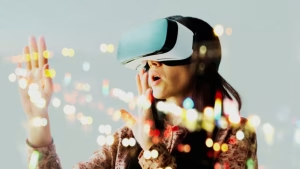
Technology Changes How We Communicate
Communication has become faster and more convenient than ever before. Messages that once took days now reach people instantly.
Technology affects communication by:
- Encouraging short and quick conversations
- Reducing face-to-face interaction
- Increasing reliance on text and emojis
- Making global communication easy
While this speed helps productivity, it can also reduce deep conversations and emotional connection. People may communicate more often, but not always more meaningfully.
Technology Influences Attention and Focus
Modern technology is designed to capture attention. Notifications, alerts, and endless scrolling encourage constant engagement.
As a result:
- Attention spans become shorter
- Multitasking becomes common
- Deep focus becomes harder
Many people check their phones without thinking. This habit shapes daily behavior and can reduce concentration and patience.
Technology Shapes Decision-Making
Technology provides access to massive amounts of information. Reviews, ratings, and algorithms guide many decisions.
This affects behavior by:
- Influencing what people buy
- Shaping opinions and beliefs
- Reducing independent thinking at times
While information helps people make informed choices, too much information can create confusion and dependence on technology to decide for us.
Social Media and Human Behavior
Social media has a powerful impact on emotions and self-perception.
It influences behavior by:
- Encouraging comparison with others
- Seeking validation through likes and comments
- Shaping identity and self-image
People often share highlights instead of reality. This can affect confidence, mental health, and social behavior, especially among young users.
Technology Changes Work Habits
Technology has transformed how people work. Remote jobs, digital tools, and automation are now common.
These changes affect behavior by:
- Increasing flexibility and independence
- Blurring the line between work and personal life
- Raising expectations for fast responses
While productivity improves, work-life balance can suffer if boundaries are not managed properly.
Technology Affects Learning and Thinking
Learning has become more accessible. People can learn almost anything online.
However, technology also changes learning habits:
- Encourages quick answers instead of deep understanding
- Reduces memorization
- Increases reliance on search engines
This shift affects how people think, solve problems, and retain information.
Technology Shapes Relationships
Digital tools allow people to stay connected across distances. At the same time, they can weaken in-person relationships.
Behavior changes include:
- Spending more time online than offline
- Reduced attention during conversations
- Preference for digital interaction
Healthy relationships require balance. Technology should support connection, not replace real human interaction.
The Emotional Impact of Technology
Technology affects emotions in both positive and negative ways.
Positive effects:
- Entertainment and relaxation
- Access to support communities
- Motivation through learning and growth
Negative effects:
- Anxiety from constant comparison
- Stress from information overload
- Reduced emotional awareness
How people use technology determines its emotional impact.
Technology and Ethical Awareness
As technology shapes behavior, ethical awareness becomes more important. People must think about how technology influences truth, values, and responsibility.
Platforms like songoftruth encourage reflection on truth-centered thinking and ethical awareness in a technology-driven world. These ideas help people stay grounded while navigating digital influence.
How to Use Technology Mindfully
Technology itself is not the problem. Behavior depends on how it is used.
Simple ways to build healthier habits:
- Set limits on screen time
- Turn off unnecessary notifications
- Focus on real conversations
- Take regular digital breaks
- Question information before accepting it
Mindful use helps technology serve human needs instead of controlling behavior.
Final Thoughts
Technology strongly shapes human behavior. It influences communication, focus, decision-making, emotions, work, and relationships. While it offers many benefits, it also brings challenges that require awareness and responsibility.
The key is balance. When people understand how technology affects behavior, they can make better choices. Used wisely, technology can support growth, learning, and connection without harming human values.
In the end, technology should enhance humanity, not replace it.